Some events you want to forget, but time won’t allow it. The sharp edge of some memories can be blunted, maybe even obscured. The nursery rhyme “Ring Around the Rosie,” is innocent enough, until you understand that a story about The Black Death is barely hidden from the children that joyfully sing it. The memory lives on. Today, people smile and laugh at the idea of UFOs taking cows away. Many even own a popular desk lamp depicting it. The real story isn’t so whimsical.
UFOs didn’t take the cows away. Not a one. It would have been more palatable than the way ranchers found what happened to them. Relief would have been a blessing, a question, of why the cows had simply vanished and not the things done by something unseen. Ranchers hardened by the range and law enforcement jaded by humanity couldn’t simply dismiss what happened, or could repeat.
Farm life is repeatable, predictable, often monotonous. Activities not mandated by the seasons usually demand attention every day, rain or shine, without fail. On a sunny morning in June 1977, my brother and enjoyed breakfast while deciding what to do outside. That summer day, the farm looked especially unknown and in need of discovery by an explorer for treasure. My mother made breakfast and waited for the daily gallon of milk from the last cow of our long-closed dairy. Dad checked cattle in the pasture early each morning before switching to milk duty. The morning already warmed the cloudless sky but had not lost its golden glow.
Dad kept his jean jacket on as he slumped into a kitchen chair, body tense, face pale and drawn. He sat immobile staring forward. The stillness subdued the small kitchen into a frozen moment outside of the world. The birds chirping through the open window seemed out of place. His normally robust voice finally whispered, “It happened,” locking eyes with Mom. Her poker face giving nothing away. Something, something terrible, had silenced a man not afraid of anything. Dad’s concentrated and strained voice, cutting and urgent, told my brother and me to not go outside. Later, our world expanded to areas outside the house that were close by and within eye sight of our parents. Dad made phone calls to trusted friends that he conversed with in hushed tones. Mom kept us away from the barn where Dad was working nearby in the pasture the rest of the day.
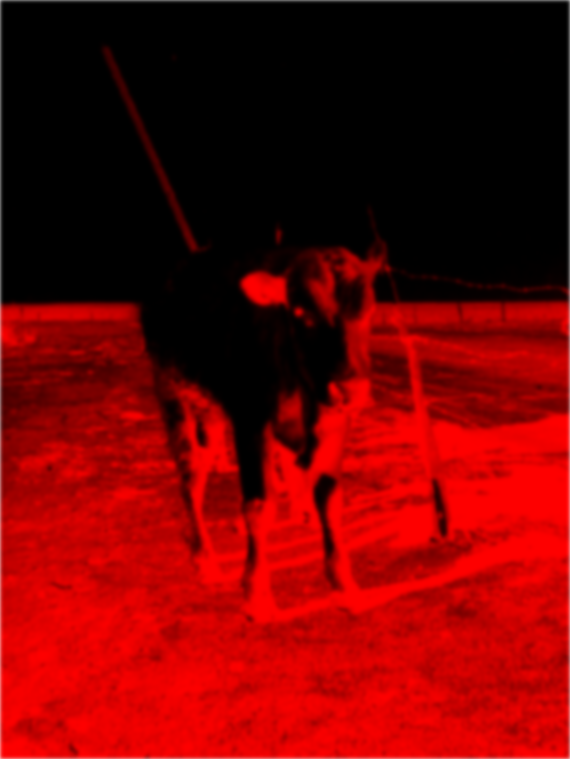
My brother and I didn’t know that 500 feet away, in the pasture just below the small butte where our house perched, was an adult steer, killed some time in the night from unknown causes. Our parents kept from us that the animal that resembled more than 40 other cattle that had met their demise just a few miles north, 30 miles south, and randomly across the area. News articles in the local paper filled in hushed conversations between our parents and adults. There was no sign of cause of death or any blood around or within the animals. Body parts were surgically removed from jaws, mouths, eyes, genitals, and rectums, with no trace of blood. No disturbance of soil, plant, or fragile stems of pasture grass. No human signs around the animals, yet organs removed with human precision.
A town meeting tried to help voice concerns and calm fears. The special-purpose meeting of the full community was an event of Biblical proportions. High school sports, graduations, or the sum of church attendance on the best of Sundays combined did not come close to matching this meeting. People were nervous and scared, with some beginning to carry firearms in their pickups and cars. But there were too many questions and few answers. None of the seasoned ranchers entertained for a second the suggestion by law enforcement that what they saw was done by scavengers. Coyotes and birds do not carry around surgical instruments to remove the same select body parts without a mess. The Colorado Bureau of Investigation’s off comment that the number of reported incidents was overblown did not go over well. As the meeting ended and the dark night set in, attendees could only agree that until a perpetrator was caught or “whatever it was” cleared up, nobody would travel in the countryside alone.
The previous few years had been one hardship after another, with some overlapping, and dealing with hard times was just part of the farming game. But the game was getting harder. The Great Drought began in 1976 and continued into 1977 with the driest period to that point in over 250 years. Mother Nature resurrected the days of The Dust Bowl with a storm of 90 mile per hour winds and dust up to 12,000 feet that made a three state area dark as night for 24 hours. Dry conditions usually preceded. . .grasshoppers? A grasshopper plague hit eastern Colorado with 30-50 of the insects per square yard, swarming if a person walked near them. And the same year, economic inflation, especially with high gas prices and shortages, decimated farmer cash reserves. Farmers knew how to handle these pitfalls. They had seen hardship before and could take action. Endure, tighten the belt, work harder, find options, keep your eye out for the better times that always, eventually, come. Now add to the list a nameless, faceless, silent something silently mutilating animals at times as close as a home’s front yard.
Not long after the town meeting, Dad moved a shotgun from inside the hall closet to a corner by the front door. He warned my brother and I to stay away from it since it was loaded. It was usually never loaded. He was doing the best he could to prepare for whatever was going on. With the closest neighbor two miles away, we were on our own against trouble. The shotgun was in response to a second steer found dead south of the farm house, farther away this time in the pasture. Same missing organs and blood, with no sound or sight of what happened. Dread and anxiety replaced surprise and shock.
After a while, the faceless menace wandering the plains at night seemed to grow tired of our local hunting ground, appearing in other areas across the plains of Colorado. At one point, over 200 mutilations were reported. The Colorado association of journalists voted cattle mutilations as the top story of the year. Anger grew among ranchers and communities until the governor met with 75 ranchers to give assurance. They weren’t impressed and neither was the bogey man. The mutilations continued.
Nobody in our community believed that little green men from Mars in UFOs were beaming up cattle. People thought the mayhem was not beyond the federal government. There was sufficient cause to blame the government for the mischief going on. To curb double digit inflation, the government froze beef prices, impacting distressed ranchers. Skirmishes regularly happened between ranchers and the Bureau of Land Management over grazing rights. And when farmers protested depressed crop prices, culminating in a march of tractor riding farmers on the streets of Washington D.C., nothing changed. The FBI not investigating the mutilations with claims they were out of the bureau’s jurisdiction added fuel to the fire of distrust and blame.
Government helicopters were believed to be involved. Shortly after the end of the Vietnam War, helicopter technologies were developed to substantially reduced rotor and engine noise. Helicopter pilots back from the war were skilled in low flight exercises. Ranchers in areas hit with mutilations reported seeing or hearing helicopters, painted black. The army ordered helicopters to fly at higher altitudes on the plains to avoid gunfire from angry ranchers. People believed the reason for the mutilations was to test for contamination in animals from nuclear tests or to identify cases of a spongiform encephalopathy outbreak. Speculations always returned to the government acting without informing locals or getting their consent.
The pastures south of the farm house were located in known flight paths from the Cold War air bases in Colorado Springs a the foot of the Rocky Mountains over 100 miles away. Despite complaints and gunfire from ranchers, pilots loved flying as close to the ground as possible in those relatively flat areas, often flying as low as 50 feet “nap of the earth”. Once, while I fixed fence in a pasture, a pilot flew over. Flying faster than sound, the first thing perceived is that something invisible is rapidly sneaking up on you. Instinctively, a person drops to the ground. The fighter comes and is gone in an instant as the roar of the engines lingers to dance on the nerves. Ranchers had a reason to suspect the government.
As the summer began to wane, cattle incidents declined, but not the specter of whatever committed them. Men sipping their beers in town at The Pool Hall or talking from the windows of parallel pickups facing opposite directions on a dirt road spoke in guarded voices. The world had changed. The wide open spaces where a person could see for miles was now hiding something, but what? Even in the most open of places there was a predominant feeling of not being alone, watched. The faint, hollow whump-whump-a of a distant sound, like a helicopter, heard but not seen, triggered thoughts of how to avoid notice. An ever so slight feeling of dread, mixed with anxiety, lingered in the subconscious, a placeholder for a nameless and shapeless danger.
Dad never reported our farm’s cattle mutilations. A total of three cattle were victims, with the third happening when the attacks had seemingly stopped. No witnesses. Dad was concerned that a stigma might happen if he made them known. Estimates are that many mutilations aren’t reported. They are now among the list of challenges faced in a rough and unforgiving world on the high windblown plains. Some struggles can be overcome with planning and action. Others, simply enduring them, and knowing they won’t let you forget them, is all one can do.


Leave a Reply