
The 1918 elementary school felt huge, but even to the eyes of a sixth grader the building’s library seemed the size of a telephone booth. There were few other reading options, similarly humble and limited. That changed when I met a scholar who lived in a sod house and rode my school bus.
The elementary school was something out of Norman Rockwell. It educated grades first through sixth in three massive rooms with deep rich oak floors, high ceilings, and pane windows. A large wooden teacher’s desk presided at the front of each room and long chalk boards stretched down each room’s longest wall with ledges for erasures, chalk, and enough chalk dust to cause respiratory issues. In some rooms, a print of the unfinished portrait of George Washington hung on the wall. The wood was always oak, and the metal fixtures long-aged brass. First and second grade students occupied a room that stretched the length of the large brick building. Third and fourth grades could be found at the end of the hall in the east wing. The “big kids”, fifth and six grades, were kept at a safe distance in the east wind. A wide hallway at the back of the school, connecting the rooms, resembling old pictures of the promenade decks of ocean liners from the great age of steam, was long enough to give the perception it grew narrower at the other end due to perspective and distance.
The school library was wedged between the first and second grade classroom and the restrooms. Combined, the boys and girls restrooms were twice the size of the library. Rumors had it that it was too big for a janitor’s closet and too small for the principal’s office, so it became the library. While classroom ceilings were about 20 feet high, the library ceiling topped at eight feet. Nobody knew what secrets were kept above the library ceiling in the dead space that must have been there. Floor to ceiling book cases on each side stood silent vigil over a thin library table with chairs. The vigil was silent because nobody witnessed a student spend any significant time in the library. It’s shelves held references and reports printed long ago, likely reaching back to the first generations of school kids who used it to learn about the Spanish American War or to read new periodicals about The Great War raging when the school was built. For us kids of a different era, the materials were decades out of date, but most importantly the books were not annotated with pictures or illustrations. There were occasional engineering drawings, like the type enlarged and sold today for home decor that celebrate their minimalist form and turn-of-the-century charm. Our library celebrated the simplicity of monocolor black and white print. Only the hanging light fixture lent incandescent color.
The classrooms didn’t offer much hope for a kid wanting to expand their minds outside of the education curriculum of basic math, science tables, and reading improvement materials. But, the once a month Bookmobile brought reading opportunities that lifted our spirits. The little service vans outfitted into extensions on wheels of the Denver Public Library System literally brought color to our reading lives. But the books offered were mainstream books for various ages. They were safe, mostly generic, and definitely more recent that our little library crypt, but not current publication releases. The subjects, mainly segregated by age, seemed generic, homogenized. A kid could always request a specific book, but there were few ways in an isolated rural town, long before the coming of cable television and the Internet, to know what else even existed.
Home did not offer a refuge. Once, Dad triumphantly brought home a full edition of the World Book Encyclopedia, all 19 volumes from the year 1948. I spent hours using them for reports and general reading. But my knowledge of the last 30 years since 1948 was spotty, missing Korea, the Jet Age, and the Space Age altogether. The farm received magazines in the form of Successful Farming. When pocketbooks felt wealthy, Woman’s Day balanced out the options. Of course, every home (except the brother bachelors living just outside of town) had a Bible, but it was not much help for book reports or kid-oriented reading.
With little to read on the hour long school bus ride to school from the farm, and the same ride back, the gentle rumble of the school bus ride was usually nap time. Until the bus route changed and I
met Royce.
Royce lived on a farm just off of the road that appeared to be a farm graveyard. Without knowing why, it seemed to be ancient. Passing by, it was hard to take in the array of old farm equipment crowded on the property, almost entirely obscuring whether anybody live there. The older automobiles hinted at life, but there was no visible home. The family living there stretched back to the early homestead days of the high plains where Royce’s grandfather homesteaded in a sod house dug into the ground. It was inherited by his father long ago, now an older farmer, and was his home as well. Many of the farms often counted themselves lucky if they subsisted in a good year, with Royce’s family aspiring to be that lucky. He wasn’t popular and being an early poster child for a nerd or geek didn’t help. His clothes were warn and always mismatched, with plaid pants being his favorite or only choice. The thick coke-bottle glasses didn’t complement his face or less than perfect smile. He was five years older than me and a high school junior. One day, we struck up a conversation on the bus and my education began.
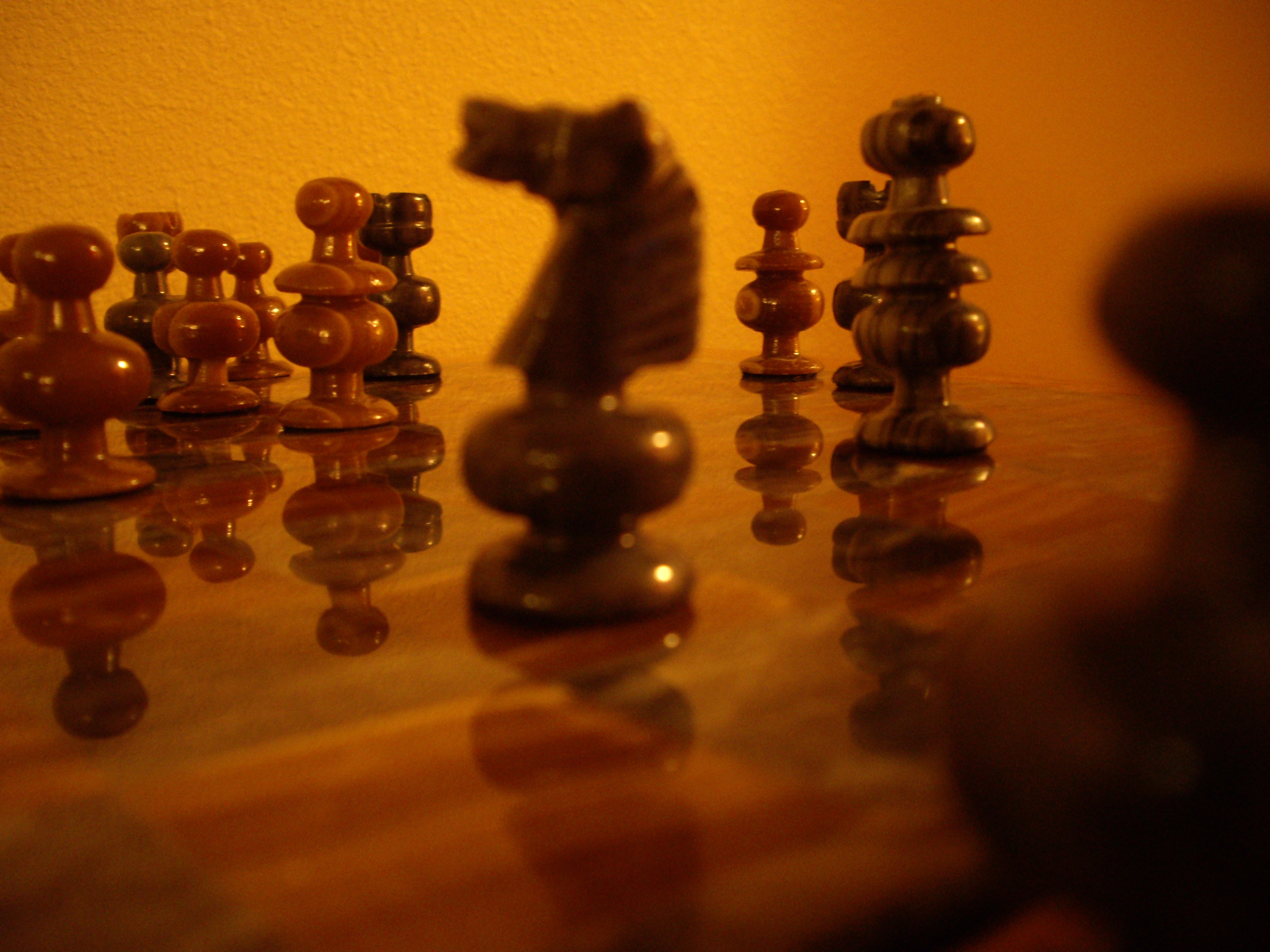
A pocket travel chess set of tiny plastic pieces with a peg on the bottom of each to fit into the matching holes on the chess board is a handy thing on a school bus. Royce introduced the game to while away the time. Time went by quickly. Requesting books from the Bookmobile on chess strategy began to extend our games over several bus rides. Royce was an avid chess player with nobody to play. I was a kid with a thirst for challenge that I didn’t recognize until I could say “check!” with smile. The ride, the countryside, the coming and going of kids on the bus, all faded away to focus on a five inch by five inch strategy playing field.
One day as the bus bumped along on a dusty farm road, Royce asked if I had ever ready a fantasy book. It would have been easier if he had asked if I spoke French, at least I would have known what French was. He tried to explain it, but if you haven’t seen an elephant a description might simply make its image seem stranger. His solution was to lend me the book he just finished. It had treasure, a dragon, and a timid hero discovering himself. I read it. Actually, I devoured it. The story was rich with description, lands far away, adventure, and places that didn’t seem anxious, or times so grim, as where I lived. The book was actually part of a series. As I began one book, he started reading the next. Our conversation became a two-person book club about the plots, characters, and world the books created. When finished with the series, Royce turned to science fiction, introducing me to outer space tales with far-off worlds.
After two years of playing chess, reading books of space heroes, and conversing about ideas, the current school year was drawing to a close. And so was my time with Royce. Graduating when the school year ended, he left the area for college. The bus rides were not as lively again, but I still had friends during the trips. The books we read were printed in pocket-sized pulp version and often came with book club advertisement inserts with the titles for other books. Enrolling in a book club was not possible, but requesting those books from the Bookmobile was a lifeline.
The journey to other times, places, worlds and ideas began with Royce introducing J.R.R. Tolkien and The Hobbit, then I marched alongside Frodo and Sam through the Lord of the Rings, and launched into outer space with Arthur C. Clarke’s 2001: A Space Odyssey and Ray Bradbury’s The Martian Chronicles. One Christmas, I received a paperback book with a collection of science fiction stories from my parents. They admitted that they had no idea what they were buying when they traveled over 100 miles to Denver to a bookstore to ask a stranger what their son might want to read. As my need for ideas and exploration grew, I branched into other readings, the texts in my school bag fighting for room with fantasy and sci-fi books. With time, the undiagnosed dyslexia I would not become aware of until adulthood lessened as a hurdle to my reading ability and joy of reading. A door of ideas opened and the door was removed to prevent it closing.
A decade after our parting, Royce and I met by chance at a local event when I returned home to attend. We briefly shared again the connection we once formed. But the reunion could only be brief. My wife, chaffing from a rural person that her urban focus didn’t value, urged me away. Years later after returning to his farm community to live, Royce died from a chance accident while delivering mail on the same roads our bus once traveled. Wherever I have lived, I have always kept a chess table handy, but rarely have a chance to play an opponent. But once, when my son was young and curious, he asked me to teach him to play chess. As an adult, he now owns his own chess set. Royce might have lived in an old sod house, but was a scholar, mentor, and planter of seeds.


Leave a Reply