Many people can identify a key person who made a difference and influenced their lives. But what about those who may have played a key role and were less noticed? A chance visit to an old country doctor revealed how someone could influence your destiny without you even realizing it.
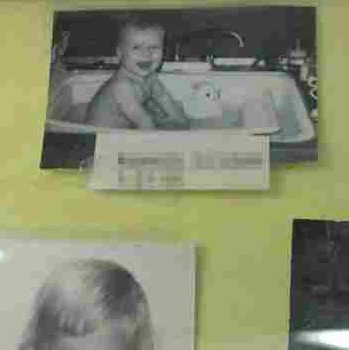
Just inside the main entrance of the Lincoln Community Hospital in Hugo, Colorado is a wall with pictures of babies delivered over the years. You can easily see over 50 years of baby pictures frozen in time and in black and white. The newborns have grown, had kids, grandkids, died, gone to war, and probably received treatment in the hospital over the years. But in the pictures they are tiny, smiling, and being held by mothers and fathers with decades out-of-style clothes. It is the closest chance of medical aid for 50 miles in several directions.
But a key element of that hospital is not inside it. In his career of 35 years, Dr. Hugo James (Doc) Scarinzi worked extensively at the hospital. He delivered over 2000 babies. His tiny one-doctor clinic in a nearby town had a waiting room that looked like Normal Rockwell had used it for his Saturday Evening Post covers. He handled everything from physicals for the football team, accidents on the interstate, and farm machinery tragedies, to the sniffles. Once I was a kid waiting to see him and everything was put on hold as a farmer brought his son, wrapped in a blanket, who had been kicked by a horse. The nurse and receptionist, Dr. Scarinzi’s daughter, rushed them into a room and everybody prayed.
One Sunday afternoon while driving past Dr. Scarinzi’s simple, one-level, stucco white home, I was drawn to stop and knock on his door. Even after having not seen him in over 25 years he remembered me. A little thinner, his dark hair now steel gray, but his voice and eyes were bright and crisp. Sitting in his simple living room, he took a break from working at a huge roll-top desk to talk.
In younger days, with bold, thick, black hair and an off-center part on the left, Dr. Scarinzi would whiz into an examination room with lab coattails ruffling, diagnose you, and then rapidly disappear to see the next patient as if the Devil himself was pursing him. He explained to me that there was an endless stream of patients with only two doctors covering a 50 mile radius. Speed was a virtue. He reminisced about charging patients $10 for an office call – It was all a rural community could afford where most people had no health insurance. Shaking his head in disbelief, Dr. Scarinzi also recalled how the malpractice insurance was $30K per month back in the 1990s.
He finished near the top of his graduating class and had his choice of where to practice medicine. If making a living was so tenuous and he didn’t come from a rural area, why would he even be a doctor in a tiny town in Colorado farm country?
“Why?” Dr. Scarinzi repeated my question.
His father and mother were first generation immigrants from Italy and knew little English. Both had quit school at the third grade, which was normal in the early 1900s in Italy. When they came to America his father was a master stone mason who had worked his way up in the trade at a cathedral in Italy. Not fully understanding what education might do compared to hard work, probably in Dad’s footsteps, they were shocked when their son wanted to go to college to be a pharmacist and then a doctor. After Dr. Scarinzi graduated from college and invited his parents to visit him in Colorado from the East Coast, his father said, “I will visit you. But if I find you treating fat women’s elbows I will leave, you will not know I was there. I will never come again. But if I find you treating people who really need your help, I will stay”. His parents stayed for 6 weeks before returning to the East Coast. He spent the rest of his life serving the small farm communities, and keeping his parents proud.
As I grew up, my household had few books. Our bookshelf consisted of a dictionary (dated 1890), The Bible, a World Book encyclopedia set (dated 1948), and Dad’s farming magazines. The Arriba school library was better, but was decades out of date with its “newest” books. Once I visited Dr. Scarinzi for ideas on “something medical” to write about for a school project. Without hesitation he loaned a forebodingly thick medical book on the human immune system to me. Struggling to decipher its secrets, I wrote about T-Cells, which nobody had heard of and were a little-known part of our blood. Years later I remembered T-Cells when I heard radio reports about AIDS and T-Cells being interlinked. I never forgot Dr. Scarinzi’s generosity and a silent but palpable expectation that I would work hard to make my own parents proud.
Over the years, I visited his office for a variety of ailments. It always seemed that part of the treatment was a shot (even as an adult, in the butt) of penicillin. I dreaded those old-fashioned glass syringes with the long needles that, to my mind, could have doubled for a knight’s lance or seemed as big as one of the long, narrow antennas on top of a skyscraper. The whole “execution by syringe” was over in a minute, but it seemed like each time the syringe actually left the doctor’s hand that it was his way of “dart practice”, always hitting the bull’s eye of my butt. When I mentioned the episodes to him, Dr. Scarinzi explained that when he was a child he was gravely ill. World War II was happening and a new drug called penicillin was rumored to cure everything, but only the military had it. Complete bed rest was his only cure. He lost a year of his childhood because of a disease, bed rest, and no penicillin. As a doctor, penicillin was available, cheap, and there were no concerns in those days about resistance. If he could save even a single child any of what he went through, then a shot of penicillin on top of everything else was what the doctor ordered.
But his healing didn’t just include doses of Penicillin. He dispensed advice on more than one occasion, which was sometimes as painful as his shots. Once I returned from college after a week of all-night studying for finals and a 400mi drive home. I slept for two days and my parents thought I was ill. Sitting in Scarinzi’s office, he examined me and then said, “Your parents worry about you and are proud of you. Always remember that”. He could tell that the college I chosen was rough and taking its toll. Maybe he remembered what it was like to be the first in his family to earn a college degree and that his words would help. They did refuel my efforts.
A few years later in college the grades were rougher. I had a steady girlfriend that would become my wife one day, I worked 40+ hours a week to put myself through college, and the grades were the worse for it. Dad took me back to Dr. Scarinzi. This time, less sick and more warn out, he made the pretense of inspecting my ears, nose, and throat. Then he said, “Your Dad tells me that school isn’t going so well?” I reluctantly looked into his piercing, expecting eyes. “Wherever you go, always remember when you are at work to work 100% and when away you give play 100%. Don’t mix the two.” He tapped me on the head with his chart board and said, “You’re fine. Get out of here.” Over 25 years I have applied his Rx to my wounds at work, used it to promote health at home, and never forgotten it.
As Dr. Scarinzi and I concluded our visit, we shook hands and he mentioned, “When I was a practicing doctor that phone on the table rang all of the time. Not so much anymore. Thank you for coming by”.
Actually in that visit, I was the one grateful to him for all he had done. Today’s practitioners can’t be as “all in one”. They want a life outside of their “day jobs” and often are not on call like Dr. Scarinzi was. He dispensed guidance and encouragement where many doctors today rarely can or do.
Driving onto the narrow, two-lane highway that left the old hospital and its unique doctor, I followed it across miles of open pasture land. A flash of afternoon sunlight caught my eye from the silver wrist cuff I wore. Bought at an Indian trading post, it was stamped with Navajo rainclouds and a hand with a spiral in the middle – the Healing Hand. I was told the piece was created for a medical person, a healer, and that the symbols protect the wearer and give healing to whomever they help. I began wearing it following the help I had given to take care of a terminally ill young man. Looking at its silver, sparkling in the Colorado sun, I wondered if destiny was the deities of old choosing your fate, God Himself planning your exact path or actually something else. Maybe destiny is the small and big choices, events, and people that set other choices and experiences in motion. Adding up over time, they cause a ripple effect that we don’t even recognize and as a result can’t change, choosing our way for us.
Long ago an old country doctor subtly set some of my destiny in motion, dispensing direction and purpose in addition to an Rx. There are more of them out there that practice their healing as doctors, priests or even a homeless man who shares wisdom, but they are hard to find. They never really stop practicing their healing, and maybe even pass along just a little of their spark to a few open to continuing it.
– Mason
 North of Nowhere - Bridging Different Worlds
Leave a comment