The Web seems to dominate everything. Many of us are “connected at a distance”, managing oh so busy social schedules, friendships, even dating online. Often, computer dating starts with scrolling through online biography after biography, hoping to find a match and a companion (with a screening process that resembles a job interview). Would things have been different if my Great Depression era grandparents of the 1930s had the Web for dating?
I can hear one of the musicians from that time, Hank Williams, crooning a somewhat different song:
“Say hey, good lookin’ – your profile looks good
How’s about accepting my Facebook friend request?
. . .
I gotta hot Match wink, and 2 dollar bill
And I know a social Meetup right over the hill
There’s soda pop and the dancing’s free
So if you click “Accept” or “Maybe”, come along with me.”
With the Web invented 60 years earlier, things could have been different. My grandmother might have not met my farmer grandfather, but instead a rich recluse farmer and raised a whole family of educated, privileged, gentlemen farmers! My own future as their descendant would have been really cool! Thank you GreatDepressionBook!
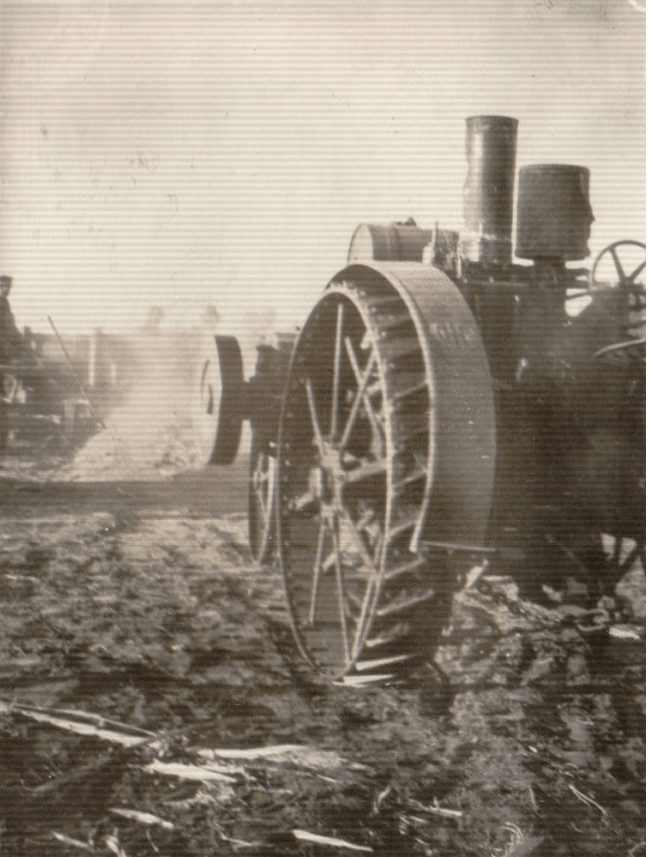
In the 1930s, Eastern Colorado farm country had fewer opportunities to meet lots of people. With my grandmother living in a town of about 1,000 souls where value was placed on people being married, there probably were not tons of single people. Town girls really didn’t venture much into the country for suitor prospects and marrying your 2nd cousin was not an option. My grandfather had it worse as a farmer outside of town, tending fields and livestock during long days of riding horse-drawn equipment. He probably came to town once every week or two for farm and house supplies, wearing his best farmer overalls. They so could have used the Web, social media, and a dating site subscription.

However, not all was lost. The next town was roughly 10 miles away in either direction, offering a possible fresh infusion to the gene pool of their small town. Each town, mostly created in the 1880s by the historic Rock Island Railroad line and connected by dirt roads that crisscrossed the area, offered life with water for the steam-powered locomotives and community for the scattered farms. But with questionable roads (often turning to deep mud in rainy times), little money amidst financial crisis, and long work days to make ends meet, the next town might as well be on Mars. Towns were self-contained communities with a distrust of rival towns. When I was a kid in the 1970s, I remember knowing fewer people, if any, in those “other towns” because each community kept largely to itself. Back in the 1930s, my Grandmother did little visiting in other towns as she did not drive; not everybody could own a Model T Ford when there was no money. Facebook back then might have taken off like wildfire to meet an untapped social gap!
So with geographic isolation, little free time, limited income or transportation, and no Web, HOW on earth did they even have a chance of meeting and ensuring my future? A bastion of most people was church. If you did not connect at the coffee social after church, there were other church socials in the form of picnics, dances, and the occasional barn raising to attract single men and women. People, though, kept within their denomination. If you were born Methodist, you did not as a general practice even visit a Lutheran church; after all, your church might say “transgressions” during the Lord’s Prayer and the other church might say “debts” and that made all the difference. Without Facebook conveniently on a smartphone to check out who was a “connection” with that cute girl in church that you liked, maybe her parents would screen out undesirable competitors and help you meet her? Oh, yes, the “parental controls” of today’s Web existed then, too, but were probably more effective because a father might use shotguns and rock salt to scare away late-night visitors to a daughter’s window. Soreness from texting thumbs was nothing compared to fresh rock salt shot at you!
If church was not your thing (which you were of questionable moral standing if you did not go to church), then there were other “networking” methods. My grandmother talked of quilting bees which were maybe as close to girls being together for happy hour as you could get. Gossip was the currency of those women sewing cloth fragments into finished quilts and the talk must have turned to who was dating whom and for how long. I wonder if that early form of Instant Messaging was faster than today’s electronic method, but not as nuanced since a friend across the quilting table could not quickly send “OMG!” to you about a topic. My grandfather was equally busy attending Lion’s Club or Elks events, although I wonder how much the farmers talked about available women as opposed to farming issues. Farmers have always had enthusiasm about their craft that carries over into social areas. They would have loved using Twitter feeds today like “#cowtippinghumor” or “#pigsescapeagain”.
Without the Web at their disposal, things seem pretty bleak for my grandparents meeting up any time soon. What about just texting or calling each other? The closest thing to texting was the postal service. The same local service that knows when somebody is “getting sweet” on somebody else because they sort everybody’s mail by hand. And if we think that social media is increasingly eroding today’s privacy, telephones during The Great Depression were worse. In those days, every telephone shared the same line with other phones, each phone having a separate ring style to tell when a call was for you (sorry, different ring styles were not invented with smartphones). The “party lines” were great for early-style conference calls, but the operator could listen in on you talking with that cute boy you met at the grocery store (and don’t forget that the operator also goes to the quilting bees). Also, be sure to listen for the “click” sound when another person decides to listen in on whoever is talking. My grandparents could have used HTTPS to make sure that communications were kept secure and private! Looking back, I’m surprised my grandparents ever met and had a courtship with any privacy.
What if they did have the Web to help them? Imagine next to the old cathedral style vacuum tube AM radio or near the Victrola record player that there is a computer in a wooden cabinet with a magical connection to the Web and its social media features, instant chat, and the power of online dating! My grandfather, dusty and tanned red-brown by the sun after a long day of farming, could sit in front of the computer looking at dating profiles. Instead of his life centering on his farming business, he appears online as a dashing man with lofty hobbies. He could screen pictures of single women and weed out the undesirable ones, like my grandmother who was pretty but not as up on the latest styles than that other woman two towns over. In turn, my grandmother could text her friends for a critique of my grandfather who might be branded as a recluse obsessed with animals. They both could post profile pictures 5 years out of date and wild looking selfies that were actually taken at church socials. They could have been really happening people that have now upped their game for the best profiles and Web lives over their rivals.
Or my grandparents could have found and met each other the way they actually did, which was by chance. Without the Web, instant communication, and crafting their own personal branding, my grandparents met in the simple meeting hall of a small town. Today, that meeting hall and the town itself do not exist. Instead, there are just a few concrete foundations at the crossroads of a gravel country road with the sound of meadowlarks in nearby fields. But in 1935, the town of Shaw, Colorado advertised in the local paper a noon dance and social; people came from over 20 miles around. Before the dance, there was an auction for box lunches made by the area’s single women. Each anonymous meal in a simple white box would be a chance to meet the person who made it and get to know each other better first hand. My grandfather reminisced that his bid of $2.50 won a lunch and the chance to meet my grandmother to eat it together. He remembers her fried chicken as the best. They danced, courted, and were married 70 years. As a child, and years after my grandmother’s death, I and many others remember Grandma Henry’s legendary fried chicken.
All of our grandparents might have been lucky they didn’t have the Web. They had to reach out and meet others and get to know them as real people. In the meantime, they lived and experienced life first hand and not through a display screen like we increasingly do now. Today, there are still live, personal, rewarding, and distinctly human avenues to find and meet people, but it takes more effort than a computer. The “old school” way might have bigger rewards, too. Thanks grandma and grandpa, you did well without the Web.
~ Mason
 North of Nowhere - Bridging Different Worlds
Leave a comment