
As a child in Eastern Colorado in 1977, I experienced what it was like to have lived in the 1930s Dust Bowl. The Dust Bowl during The Great Depression was the worst man-made ecological disaster in American history. It brings to mind the iconic images of farm houses buried under the drifting earth, barren fields with the scraggly remnants of crops, and the black and white photographs of haggard men, women, and children with hopeless expressions.
In the 1930s, my family was wheat farming in the Oklahoma Panhandle at the epicenter of the The Dust Bowl catastrophe. My grandfather left the lands his father had pioneered a generation earlier, turned into a moon scape by the howling wind of the Dust Bowl, to make a fresh start in Colorado. I grew up living on the farm that he had worked and had been handed down to my father. Our family fled one set of adversity to be hit 40yrs later by a reminder.
The family farm house was situated near the edge of a Plateau overlooking the Bobtail of The Arikaree River. The endless horizon of The Colorado High Plains was beautiful. The river was not. It was a twisting ribbon of coarse sand that, usually 30th wide, was a dried riverbed for years at a time. Then, after a series of infrequent heavy rainstorms, the river would erupt into a torrent that could carry away anything in its boiling anger. Like the river, the weather in Eastern Colorado would be constant, never changing, until a violent flare in temperament by Mother Nature showed Mankind who was boss. The dust storm I saw emerged just as quickly and was terrifying and wonderful in its show of strength.
On a cold winter day on February 19, 1977 I had recently turned 11 years old. It was a great morning of cinnamon toast and chocolate milk while watching cartoons of Bugs Bunny and Scooby Doo. Outside, it was bitter cold and the wind briskly blew. In the afternoon I was outside in my quilted light blue coat “messin’ around” near the barn. Perched on the edge of the plateau drop off and 50ft across the farm yard from the house, from the barn you could see an open and wide expanse of crop land for at least 20mi, punctuated here and there by pasture. Dotting the landscape would be other farms with their houses, grainary bins, and machinery sheds. Tree rows were the indicators of a family farm, with their long rows of pine trees or cottonwoods planted in long lines at the north end of a farm to stop the north winds. Most of the tree “windbreaks” were planted after The Dust Bowl to lessen the wind, conserve soil, and learn from the hard lessons of losing soil that was more valuable than gold. That day, there seemed to be not much going on with the wind, the cold, and the lead-colored sky with its thin clouds.
But by mid-afternoon, things changed. Dad burst through the front door of our 400sqf house and with two steps was in the kitchen, declaring, “A dust storm is coming”! Dust storms from time to time are nothing unusual, but Dad declaring one was. With urgency he began barking orders to get ALL of the house towels, wash cloths, whatever we had, wet them, and jam them at the base and tops of the windows. The old windows, offset by weights in the casings when you opened them, with each pane held in place by window putty, often rattled in the wind, but we had never blocked them!
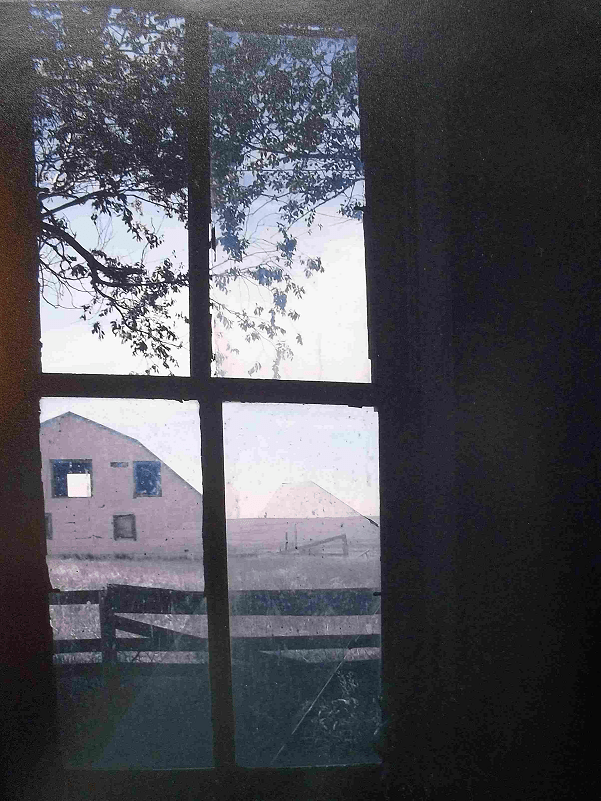
Then Dad exclaimed to Mom, “Will you look at that. . .!” as he gazed out of the long, tall, windows in the kitchen. We all looked. No explanation was needed. Rolling in from the Southwest, in a black bank spanning the horizon and blotting out the light as it approached, was a towering, rapid storm approaching. It seemed to gobble up the fields, pastures, and distant farms silhouetted against the sky, turning day to night. Within 10min the dust storm had progressed from looking like an oddity in the distance to a towering mass between the barn and house. It was HERE. The barn slipped into blackness and the howling rush of the storm overtook the house. Sand and dust made gritty, scratching sounds on the windows, like invisible creatures looking for a small crevice to enter. The darkness was worse than night because the mercury-vapor lamp in the farm yard, just 20ft away, could not be seen in the black mirk. Years later as an adult I saw the motion picture Hidalgo in which a sand storm with a wall of sand engulfs the hero; in the movie the scene is opaque beige but for our small farm house the outside was chocolate syrup black.
As the day wore into evening, the storm stayed constant. We began to hear odd sounds on the roof, like bumping or muffled thuds. The television was useless as the antenna on the roof was one of the thuds, flying into the abyss. The radio reports indicated that the storm was widespread and winds were 25-75mph with a potential of 100mph. The dust storm was being called a “Black Blizzard” and nobody knew when it would end. Dad had seen the storm coming and earlier had herded the livestock into the barns, but they had to be checked and fed. Eventually he would return, covered in dust like he had been making snow angels at the beach, but coughing and sneezing black for half an hour afterwards.
“. . .a towering mass between the barn and house. It was HERE.”
As I drifted to sleep in my bed that night, I was scared; the dark, the moan of the wind, the uncertainty of when it would all stop. My bedroom was built of sturdy adobe with thick plaster walls, but I felt like the storm was not “out there” but “with me”. I woke up the next morning to a thin layer of dust covering the entire bed and me. The dust was everywhere: The bed, inside clothes drawers, settling on the dinner table and your water glass. Everybody began to cough a little and constantly blow noses. At times it seemed harder to breathe.
After three days the storm finally ended and sunlight came. I think the day the Black Blizzard ended we were in shock for most of the day in disbelief, finding it hard to believe that we saw blue sky and sunshine again. The fine silt of the valuable topsoil, similar to the Dust Bowl, had drifted against structures, filled pickup beds, infiltrated cars and kitchen pantries, and was a reminder for months, if not a year to come.
My family was lucky. The storm lasted only 3 days instead of the 6 days that it raged in other areas. It was a result of a drought from 1974-1978 and over farming. But you can’t blame farmers for the over farming. That time period was the height of the gas crisis in America and multiple failed crops during the drought. Farmers were trying to just survive natural and economic circumstances. They were the same conditions as the Dust Bowl 40yrs earlier. In fact, a major Dust Bowl storm erupted almost 40yrs earlier on Feb 18, 1937 in Eastern Colorado.
Many see the Dust Bowl of the 1930s as a symbol of what the end of the world could vaguely resemble with drought, crop failures, swarms of insects, and smothering dust engulfing it all; people died of lung congestion from inhaling dust, especially children. For others, the Dust Bowl is an example of Man’s carelessness with the land. The iconic book Grapes of Wrath was based on the experiences of those refugees. But for most, it is just a set of stories about adversity, lost to another time and largely forgotten.
Some events become part of a family’s collective memory, like Mount St. Helens erupting or Hurricane Katrina. The Dust Bowl is part of my collective family memory, our identity, of something that we survived. As a child, I would watch grandaprents who had lived through The Great Depression talk with their peers, retelling of its hardships in hushed overtones and with a weight that underscored tragedy, adversity, and pride. Not unlike the potato famines that struck Ireland in the 1880s, driving waves of immigrants to America, those who had stayed and survived The Dust Bowl looked down on those who left. And now, I had endured my own trial by nature. Our stories weave a thread that links families over time. In my son’s world of electronic technology, urban sprawl, and the forests of The Pacific Northwest, somehow I don’t think he will ever believe me when I tell the stories to him.
~ Mason
 North of Nowhere - Bridging Different Worlds

Leave a comment